Why We Built MutualMarkets
Before MutualMarkets, co-marketing partnerships were managed through email chains, spreadsheets, legal documents, phone calls, and personal relationships. Brands often spent months identifying partners, negotiating agreements, coordinating creative approvals, and launching campaigns. There was no structured system for managing the complete lifecycle of a partnership.
MutualMarkets transformed that fragmented process into a connected SaaS platform spanning partner discovery, deal creation, creative development, campaign execution, and performance measurement. As the founding product designer and director, I defined the product vision, platform architecture, UX strategy, and design system for an AI-enabled platform that helped brands and entertainment companies discover partners, structure co-marketing deals, manage approvals, and launch campaigns within a single operational workflow.
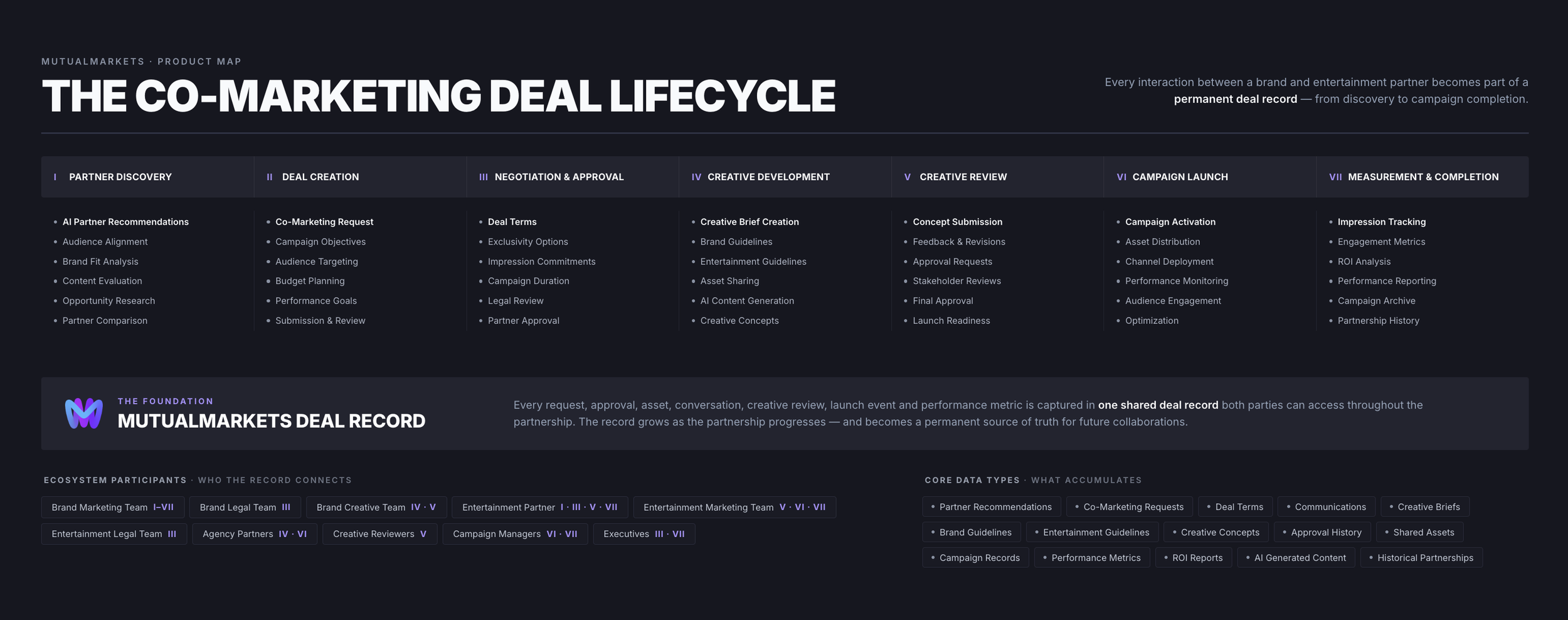
Mapping the Lifecycle
Before designing interfaces, I mapped the entire co-marketing partnership lifecycle, from partner discovery to campaign performance measurement, to identify all participants, workflows, decision points, and data dependencies needed to support the process.

Product Systems
The partnership lifecycle required multiple connected systems working together across brands, entertainment partners, legal teams, marketers, and executives. Each product area was designed to support a specific stage of the partnership process while sharing data, approvals, assets, communications, and performance metrics through a common system of record.
Explore the key systems that powered partner discovery, deal management, creative collaboration, campaign execution, and measurement.